


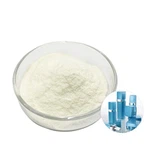
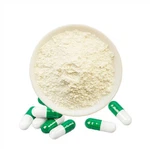

Mannan Oligosaccharide
What Is Mannan Oligosaccharide?
Mannooligosaccharides (MOS) are indigestible low carbohydrates obtained by partial fermentation of mannose. They can generally be divided into two categories: α-mannooligosaccharides and β-mannooligosaccharides. α-Manno-oligosaccharides are obtained through α-(1-6) linkages via the yeast cell wall mannose scaffold, while β-mannooligosaccharides are normally obtained through mitochondria.

Yeast manno oligosaccharides Is a kind of functional oligosaccharide prebiotic additive, derived from a yeast cell wall. MOS can not only increase the beneficial Bifidobacterium.

5% Mixed Feeding Mannan Oligosaccharide
Selecting fresh beer yeast as raw materials, adopting modern biological engineering technology, it is refined by going through a series of process such as the efficient wall breaking and directional enzyme solution,separation and purification, etc.

5% Insoluble Mannan Mixed Feeding Oligosaccharide
Mannose oligosaccharide, also known as mannose oligosaccharide, is a new antigenic active substance extracted from the cell wall of yeast culture.Because it not only has low heat, stability, safety, non-toxic and other good physical and chemical properties,but also has the role of protecting the intestinal tract and improving immunity, foreign countries have been widely used as feed additives in the feed industry.

Mannan Oligosaccharides for Dogs
Mannan-oligosaccharide (MOS) based nutritional supplements are widely used in nutrition as a natural additive. MOS has been shown to improve gastrointestinal health as well as overall health, thus improving well being, energy levels and performance. Most MOS products, particularly those that have been scientifically reviewed, derive from the cell wall of the yeast, Saccharomyces cerevisiae.

Mannan Oligosaccharides in Poultry Nutrition
Mannan oligosaccharide (MOS), also known as mannan oligosaccharide or glucomannan oligosaccharide, is a new type of antigenic activity extracted from yeast cell wall. It has good physical and chemical properties such as low heat, stability, safety and non-toxic.

Beta glucan can be widely found in various organisms in nature.It should be noted that glucans from different sources have different structures,physiological activities and immune regulation capabilities.
Advantages of Mannan Oligosaccharide
Promote the intelligence and cognitive development of animals
Adding mannan oligosaccharides can stimulate the growth of beneficial flora in the intestines of animals and produce a variety of vitamins and amino acids that can promote the intelligence and cognitive development of animals.
Enhance animal immunity
Mannan oligosaccharides can enhance the animal immune system, promote intestinal mucosal barrier function, increase the number and diversity of beneficial bacteria in the intestine, and prevent pathogenic bacteria from invading and activating immune cells.
Improve animal intestinal health
Mannan-oligosaccharides in bulk can form a protective layer of nutrients in the intestines of animals, preventing intestinal bacteria from decomposing and absorbing nutrients in food. At the same time, mannan-oligosaccharides can also repair the intestinal mucosa. It can cause minor damage and promote the regeneration and proliferation of intestinal epithelial cells.
Promote animal growth and development
Purely natural mannan oligosaccharides can provide the energy and nutrients needed for animal growth and development, and promote the development of resistance and immunity.
Why Choose Us
Quality assurance
We have a perfect quality assurance system and a sound control system, strictly controls all links in the industrial chain such as raw material selection, product r & d, production management and channel sales.
Good service
Nanjing tessin biological with sincere attitude, as always to provide customers with high quality products, satisfactory service. We insist on producing high quality green products for animal and human health.
Technical team
The company has a professional technical team composed of highly educated and high-quality talents. The members are young and energetic, innovative and willing to meet challenges.
Fast delivery
We have signed agreements on strict transportation terms with transportation companies. Strengthen the supervision of storage and transportation. Make the products arrive at the destination safely and quickly.
Poultry nutritionists are now forced to find alternatives to antibiotics that promote growth, or at least significantly reduce the amount of antibiotics used to maintain efficient broiler production and enable the production of safe poultry eggs and meat products. Mannan oligosaccharide (MOS), a probiotic derived from the yeast cell wall (Saccharomyces cerevisiae), has received increasing attention mainly due to its ability to bind to the thread-like pili on pathogenic bacteria and prevent them from adhering to the intestinal wall , thereby avoiding their stabilization and the resulting colonization and reproduction until disease levels are reached, it therefore proves to be the most effective solution for an antibiotic-free diet and provides effective support for the digestion and immunity of poultry. Several studies have confirmed that the use of MOS as a feed supplement in poultry diets can achieve similar trends as when birds are fed diets rich in antibiotic growth promoters. Additionally, MOS has a positive impact on body weight gain, feed conversion ratio, egg weight, egg production, fertilization rate and hatchability, thereby improving bird health, energy levels and performance. It is also thought to act as an antioxidant, aiding in mineral retention, improving bone mineralization and thus overall improving poultry performance. This article aims to elucidate the origin, mode of action and beneficial application of MOS in poultry diets to improve production, increase immunity, protect consumer health, and should be used as a natural growth promoter at commercial levels to replace poultry Synthetic antibiotics in the industry.
Use of Mannan Oligosaccharide in Broiler Diets an Overview of Underlying Mechanisms
Antibiotic resistance has led poultry nutritionists to find alternatives for antibacterial growth promoters in broilers. Among these substitutes, one is mannan oligosaccharides (MOS), a yeast cell wall derived prebiotic. MOS decreases the load of pathogenic bacteria through 1) binding bacterial type-1 fimbriae 2) increasing goblet cells which produce bactericidal mucin and 3) providing favourable environment for the growth of beneficial bacteria leading to competitive exclusion. Balance between pathogenic and beneficial bacteria causes increase in villus length and decrease in crypt depth which are biomarkers for gut morphological improvement. As structure is equal to function, improvement in intestinal morphology increases activity of digestive enzymes and ultimately improves digestion. Besides these, immunomodulatory effect of MOS activates macrophages of gut associated lymphoid tissues resulting in improvement in cellular, humoral and cutaneous immunity. MOS also increases production of butyric acid and decrease pH of intestine in broilers. Though these combined mechanisms, MOS improves growth rate and performance of broilers.
Microbially produced mannan/mannan oligosaccharides (MOS) are well documented to trigger various defense and resistance responses in numerous plants. Owing to its intensive properties, mannan/MOS have been evaluated as elicitor in crop protection and pest management for sustainable agriculture. Therefore, it is essential to extract and purify mannan/MOS from microbial sources and characterize them for applications in various fields. Mannan/MOS are produced by S. cerevisiae and extracted using the alkali lysis method, followed by deproteinization using the Sevage, TCA, and hydrochloric acid methods. The extracted mannan/MOS can be quantified, characterized, and evaluated for its role as an elicitor.
What Is the Use of Mannan Oligosaccharides
Prebiotics
Mannan oligosaccharide is widely used as a prebiotic to promote the growth and activity of probiotics (beneficial intestinal flora), thereby maintaining the balance of intestinal flora. This helps support gut health and prevents the growth of harmful bacteria.
Food additives
Since mannan oligosaccharide is beneficial to the human body and animal intestines, it is used as a food additive to enhance the nutritional value of food. It can be added to a variety of foods such as yogurt, cereal, cereal bars, energy bars, etc.
Health products and nutritional supplements
Mannan oligosaccharide is made into health products and nutritional supplements for human or animal consumption to provide prebiotic benefits, support the immune system, and improve intestinal health.
Agriculture and animal husbandry
In agriculture and animal husbandry, mannan can be used as a feed additive to improve the growth performance, immune function and nutrient absorption of animals.
The white leg Litopenaeus vannamei shrimp is of importance to the eastern Pacific fisheries and aquaculture industry but suffer from diseases such as the recently emerged early mortality syndrome. Many bacterial pathogens have been identified but the L. vannamei microbiota is still poorly known. Using a next-generation sequencing (NGS) approach, this work evaluated the impact of the inclusion in the diet of mannan oligosaccharide, (MOS, 0.5% w/w), over the L. vannamei microbiota and production behavior of L. vannamei under intensive cultivation in Ecuador. The MOS supplementation lasted for 60 days, after which the shrimp in the ponds were harvested, and the production data were collected. MOS improved productivity outcomes by increasing shrimp survival by 30%. NGS revealed quantitative differences in the shrimp microbiota between MOS and control conditions. In the treatment with inclusion of dietary MOS, the predominant phylum was Actinobacteria (28%); while the control group was dominated by the phylum Proteobacteria (30%). MOS has also been linked to an increased prevalence of Lactococcus- and Verrucomicrobiaceae-like bacteria. Furthermore, under the treatment of MOS, the prevalence of potential opportunistic pathogens, like Vibrio, Aeromonas, Bergeyella and Shewanella, was negligible. This may be attributable to MOS blocking the adhesion of pathogens to the surfaces of the host tissues. Together, these findings point to the fact that the performance (survival) improvements of the dietary MOS may be linked to the impact on the microbiota, since bacterial lines with pathogenic potential towards shrimps were excluded in the gut.
Seventy-two Holstein calves were used to study the effect of feeding antibiotics or mannan oligosaccharides (MOS) in milk replacer. Calves were fed a 20% protein, 20% fat milk replacer containing antibiotics (400 g/ton neomycin + 200 g/ton oxytetracycline), MOS (4 g of Bio-Mos/d), or no additive (control) for 5 wk. Milk replacer was reconstituted to 12.5% dry matter and fed at 12% of birth weight during wk 1 and 14% of birth weight in wk 2 to 5. Fecal scores were monitored 3 times per week; body weight, heart girth, withers height, hip height, and hip width were measured at birth and weekly to 6 wk of age. Addition of MOS or antibiotics increased the probability of normal scores for fecal fluidity, scours severity, and fecal consistency as compared to control calves during the course of the study.
Consumption of calf starter increased at a faster rate in calves fed MOS, and these calves consumed more calf starter after weaning (wk 6), than those fed antibiotic. No treatment differences in growth measures, total blood protein, or blood urea nitrogen were detected during the trial. Addition of MOS or antibiotics to milk replacer improved fecal scores in calves. Feed intake was improved in MOS-fed calves compared to antibiotic-fed calves, but this difference did not result in growth differences during the experimental period. The results suggest that antibiotics in milk replacers can be replaced with compounds such as mannan oligosaccharides to obtain similar calf performance.
What Is Mannan Oligosaccharides in Dog Food
Manno-oligosaccharides in dog food are usually a nutritional additive whose purpose is to provide for the intestinal health and nutritional needs of dogs.One of the main reasons for adding manno-oligosaccharides to dog food is to help promote a balanced intestinal flora in dogs and support a healthy digestive system. It is thought to enhance the growth of good bacteria, thereby helping to inhibit the growth of harmful bacteria.Mannan oligosaccharides can also simulate some components in dog breast milk to provide puppies with more comprehensive nutrition. This is very important for your puppy' s immune system development and overall health.
Mannan oligosaccharides (MOS) have been studied and applied as feed additives, but there is a lack of consensus on its regulatory effects on the growth performance and immunity of aquatic animals. Their immunoprotective effects on the freshwater fish pufferfish have not been fully studied. We studied the effects of dietary MOS 0, 200 and 400 mg/kg on growth performance, non-specific immunity, intestinal health and resistance to Aeromonas hydrophila infection in Microcystis agglomerans juveniles. The results showed that there was no significant difference in the weight gain rate of juvenile plaice after 8 weeks of feeding, while the feed conversion rate of 400 mg/kg in the MOS group decreased. Dietary MOS increases the survival rate after infection with A. agrocephala larvae, which may be attributed to the enhancement of host immunity. Dietary MOS improves the host's bactericidal and antioxidant capabilities by regulating the activity of hepatic antimicrobial enzymes and antioxidant enzymes. Supplementing MOS can increase the number of intestinal goblet cells, protect the intestine from intestinal fold necrosis and damage to microvilli and junctional complexes, thereby maintaining the stability of the intestinal epithelial barrier. Expression levels of immune and tight junction-related genes increased in Volvocepha after feeding MOS for 8 weeks. The upregulation of immune and tight junction-related genes in the MOS supplemented group after infection was not as significant as in the control group. Supplementing with MOS may inhibit the damage caused by excessive intestinal inflammation. Dietary MOS affects the richness and composition of the gut microbiota, thereby improving intestinal health of Microcystis agglomerans juveniles by increasing the relative abundance of beneficial gut microbiota. Dietary MOS shows significant immune protection against Cephalosporium larvae and is a functional feed additive and immune stimulant.
Our Factory
Our company is based on the health biological industry, and has established a professional health biological technology center in conjunction with professional research institutes and several industry professionals. Tessin Bio has a large number of talents, advanced and complete production equipment and experimental equipment, and the technicality and reliability of all products are in the forefront of the industry. In recent years, the company has continued to grow and expand, and its products have become increasingly abundant. The manufactured products have been widely used in all walks of life and are well received by users from all walks of life. "Pursue excellence and challenge the limit" is Tessin's unswerving philosophy for a long time, it is also Tessin's unremitting spirit of struggle, and it is the programmatic goal of corporate behavior and employee behavior. Tessin is committed to developing product possibilities, improving product quality and taste, continuously reducing product costs, and providing customers with the best products and services.


Certificate

FAQ
Hot Tags: mannan oligosaccharide, China, manufacturers, suppliers, factory, customized, buy, made in China, immuno glucan, yeast beta glucan supplement, host defense beta glucans, pure encapsulations beta glucan, beta glucan and immune system, beta glucan on skin
Previous
No InformationYou Might Also Like


Send Inquiry